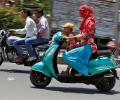
The two-wheeler sector has been underperforming its peers on the volumes front for over five quarters now. Even in the March quarter, Bajaj Auto and Hero MotoCorp posted a 17-24 per cent YoY decline in volumes, the sharpest in the listed auto universe. The ongoing impact of frequent price hikes, all-time high fuel prices, and muted rural sentiment has led to the lacklustre showing by two-wheeler makers. What has aggravated the situation for two-wheeler companies, which get almost all their sales from the internal combustion engine or ICE-based units, is the traction for electric two-wheelers (EV).

China's covid crisis could provoke a raw material crunch for India's EV industry later this year.

Even as India overtakes Japan in automotive sales in 2022, moving to third place for the first time, oddly enough the country's biggest motor show is going to see some big hitters give it a clear miss. Some prominent automotive brands have cited high event costs, negligible returns on investment, poor event management, and unfavourable location as reasons for their reluctance to participate. Major pure-play electric two-wheelers, too, are riding past this year's edition of the Auto Expo.
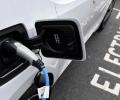
Proliferation of home chargers of around 7 KWh and above, which take six to seven hours to fully charge a car depending on the model, bring running costs down by a third or so. That, coupled with the increasing range of modern electric cars, can lead to a massive increase in sales.

'Currently, EVs are about 30-50 per cent more expensive than ICE vehicles. I believe the inflection point for EVs will come when this price gap narrows to 20-25 per cent. That's when people will start coming in.'

The demand for passenger vehicles (PVs) is expected to sustain even beyond the ongoing festival season as a new set of customers, those who gained confidence to buy cars following the recent GST rate cuts, will begin to visit dealerships now, said Shailesh Chandra, president of the Society of Indian Automobile Manufacturers (Siam), on Wednesday.

India will have 30 per cent of its two-wheeler industry turning electric by 2030 as new manufacturers lead the shift, said a report on Monday. Passenger vehicles will be 15 per cent electric and the three-wheeler segment 75 per cent electric by 2030, said the report by BNP Paribas called 'India Autos-Electric vehicles: Minutes to midnight'. "We see FY22 as the year of inflection for the two-wheeler EV industry, with an accelerated EV adoption helped by incentives, wider availability, model launches, rise in crude prices and improved general awareness. We see 30 per cent of the 2W industry turning electric by 2030; the pace of incentive withdrawal presents an upside/downside risk," the report (India Autos - Electric vehicles: Minutes to midnight) said.

Players like Ola Electric, Ather Energy, Kinetic Green and BGauss are introducing premium services and infrastructure enhancements.

The tariff removal will lower prices of Harley's large-displacement imported motorcycles, which retail between 14.5 lakh and 45.8 lakh but after the duty cut volumes are expected to remain modest.

Supply chain constraints will keep plaguing automobile companies even though demand significantly improved resulting in a 13 per cent year-on-year (YoY) increase in sales in financial year 2021-22 (FY22). Executives at auto firms fear that the Russia-Ukraine war will further dent the sector's prospects of recovery as supply chains face more disruptions. "The visibility in the supply side is so hazy that it is difficult to give even one quarter projection. But all the parameters of demand like pending bookings and enquiries are increasing.
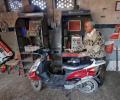
The new scheme may link the incentives to the battery power - higher the power, higher the incentive and most electric two-wheelers running on Indian roads use low power and fast charging batteries.

BMW Group India recorded its highest annual sales on the back of strong demand for its top-end ICE (internal combustion engine) and electric vehicles (EVs). The German luxury automaker on Thursday announced that its domestic car sales jumped 18 per cent year-on-year (Y-o-Y) to 14,172 units in calendar year 2023 (CY23). This mirrored a trend in the luxury space, with its peers also reporting record numbers.
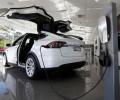
Sales of total electric vehicles in India are expected to be around 10 lakh units this year, equal to what was sold collectively in the last 15 years, mainly riding on the good traction witnessed by electric two-wheelers, Society of Manufacturers of Electric Vehicles (SMEV) said on Thursday. In 2021, the sales of electric two-wheelers (E2Ws) in the country jumped over two-fold at 233,971 units driven by a good traction of high-speed scooters as compared to 100,736 units in 2020, SMEV said in a statement. "We haven't seen better days than the last few months in the entire EV journey.

With sentiment for the automotive (auto) sector turning positive, stocks of two-wheeler auto majors have been hitting their 52-week highs. Hero MotoCorp, Bajaj Auto, TVS Motor Company, and Eicher Motors recently reached their yearly highs on strong sales in the festival season and the expectation of faster growth rates ahead. Since the start of this month, listed two-wheeler majors have delivered returns in the 12-17 per cent range, compared to the 7 per cent gains for the S&P BSE Auto Index and 3 per cent for the benchmark S&P BSE Sensex.

Auto majors Maruti Suzuki, Tata Motors and Mahindra & Mahindra reported robust sales in September as reduced price tags owing to GST rationalisation led to record demand in the Navaratri period. The month also saw Tata Motors and Mahindra & Mahindra settling at number two and three positions, respectively in vehicle wholesales ahead of Hyundai Motor India.
Retail sales of passenger vehicles grew last month but the sales of two-wheeler and commercial vehicles remained low compared to the pre-COVID month of May 2019, according to automobile dealers' body FADA. On Monday, FADA said that overall auto retails stood at 16,46,773 units in May, down from 18,22,900 units in May 2019. "May 2022 retails when compared to May 2019 reveal that sales are still not on a growth trajectory as overall retails were down by 10 per cent.

The Ministry of Heavy Industries has approved 11 electric vehicle (EV) manufacturers, including Ather Energy, Bajaj Auto, Hero MotoCorp, Ola Electric, and Mahindra, to receive incentives under the recently introduced Electric Mobility Promotion Scheme (EMPS) 2024. "A total of 11 firms have been granted approval under the EMPS, with several more under consideration," informed a senior official of the ministry to Business Standard. The scheme aims to sustain the growth in EV sales, replacing the Faster Adoption and Manufacturing of Electric Vehicles - II (FAME-II) scheme.
Society of Manufacturers of Electric Vehicle (SMEV) on Thursday said sales of EVs in India fell 20 per cent in the financial year 2020-21 to 236,802 units. In 2019-20 sales of electric vehicles (EVs), including electric two-wheelers (E2W), electric three-wheelers (E3W) and electric four-wheelers (E4W), stood at 295,683 units. For FY21, the E2W segment sales declined by 6 per cent to 143,837 units, as compared to 152,000 units in FY20, SMEV said in a statement, adding that the FY21 E2W sales included 40,836 high-speed and 103,000 low-speed E2W. The E3W segment registered sales of 88,378 units as against 140,683 units sold in FY20.
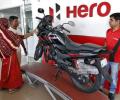
Hero MotoCorp anticipates a big rebound in two-wheeler (2W) sales in rural India over the next four to eight quarters, driven by favourable factors such as a decent monsoon, rising crop prices, improved employment conditions, and increasing consumer confidence, its chief executive officer (CEO) Niranjan Gupta said on Wednesday. Amid tepid rural sales, he stated that there is a "strong case" for GST (goods and services tax) on entry-level two-wheelers, which are under 125 CC, to be moved down from 28 per cent to 18 per cent as they are used by "masses".

In the e2W category, which accounts for more than 60 per cent of total EV sales, volumes fell 15 per cent to 118,944 units in November, compared to 139,787 units in the previous month

Passenger vehicle retail sales witnessed 3 per cent on-year decline in May with customers delaying purchases in several states due to India-Pakistan conflict and further softening of demand for entry-level models, dealers' body FADA said on Friday. The passenger vehicle registrations last month stood at 302,214 units, as compared to 311,908 units in May 2024.

With gains of over 28 per cent, Hero MotoCorp has emerged as the best-performing largecap automotive stock over the past three months. The rally has been driven by an improved outlook for the rural segment, higher demand during the ongoing festival season, and rising affordability following cuts in goods and services tax (GST) rates.

Amid challenging market environment, Maruti Suzuki India and Mahindra & Mahindra reported an increase in vehicle dispatches to dealers last month while Tata Motors and Hyundai saw a year-on-year drop in sales.
Traversing from being just vehicle manufacturers to mobility solutions providers amid a raging debate over which eco-friendly technology must be incentivised, the Indian automobile industry is driving in the new year under the shadow of a slowdown in sales with the post-pandemic pent-up demand in distant memory. The shift in the auto industry -- where advanced technologies like autonomous driving, vehicle intelligence, connected features and electrification are quickly gaining traction -- will be reflected in the upcoming Bharat Mobility Global Expo in which India's flagship Auto Expo has been clubbed to be held from January 17-22, 2025 in Delhi-NCR.
Nearly a decade ago, the first fully electric vehicle (EV) caught fire on the road in the US. It was a model from Tesla, the world's most admired EV maker. A metal fragment punctured the underbelly of the vehicle, penetrating its battery pack, leading to a fire. Indian lawmakers and automakers have had nine years to study the incident (in fact, three Tesla Model Ss caught fire in two months in 2013) but seem to have learnt little.
as the FAME II deadline of March 31, 2024, nears, EV manufacturers are worried about their investments and future plans.

The Rs 500-crore Electric Mobility Promotion Scheme (EMPS) 2024, introduced by the Centre to provide incentives to the electric mobility industry, will conclude on July 31 with barely 3.6 per cent of the targeted vehicle sales achieved so far. This is in stark contrast to the earlier flagship Faster Adoption and Manufacturing of Electric Vehicles (FAME) scheme, which exceeded its sales targets. According to data from the Ministry of Heavy Industry (MHI), only 13,499 of the 372,215 targeted vehicles have been sold under the EMPS scheme.

Ahead of the upcoming Union Budget, Society of Manufacturers of Electric Vehicles (SMEV) has asked Finance Minister Nirmala Sitharaman to either rejig the FAME II scheme or reintroduce FAME I, saying the programme meant to promote EVs in its second avatar has been able to achieve less than 10 per cent of its target. The Rs 10,000-crore FAME-II scheme which is to be implemented over a period of three years, came into effect from April 1, 2019. It is the expanded version of FAME India I (Faster Adoption and Manufacturing of (Hybrid) and Electric Vehicles (FAME) which was launched on April 1, 2015, with a total outlay of Rs 895 crore.
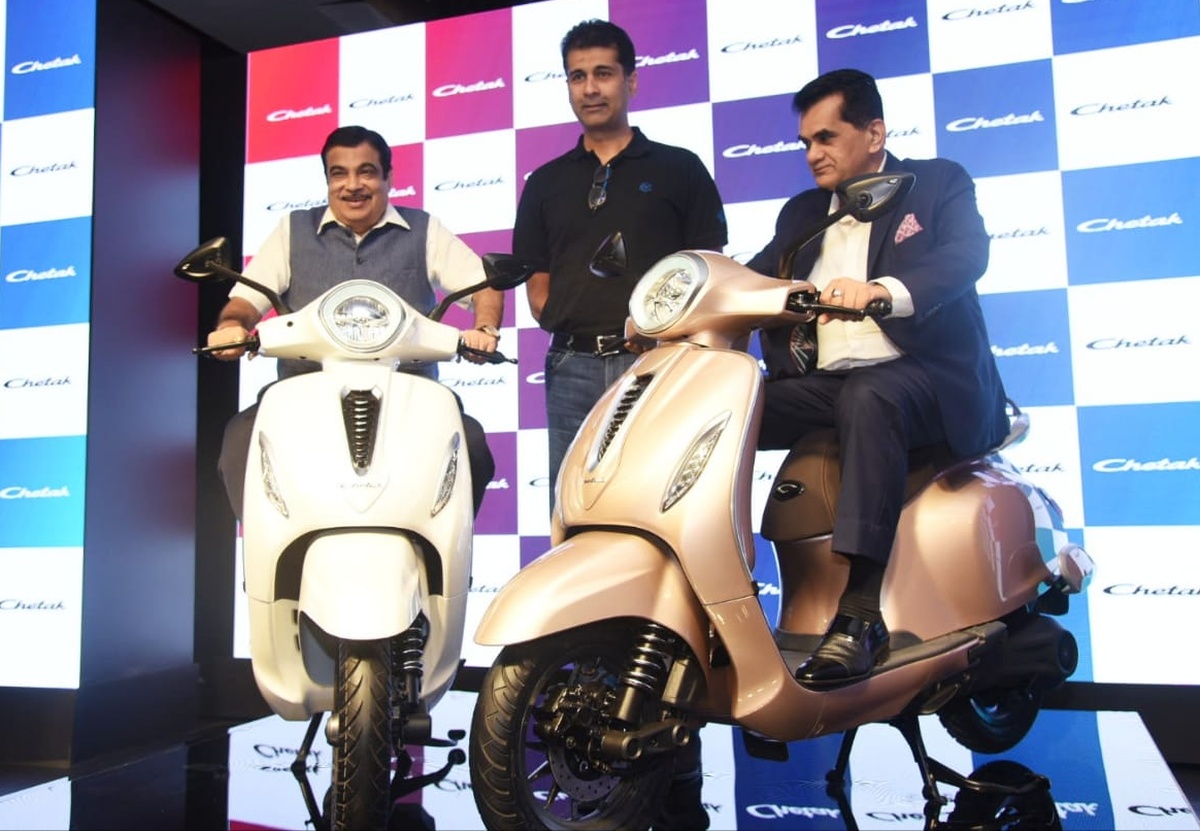
EV players suggest a reduction in the goods and services tax on batteries from 18 to 5 per cent as it would help push demand.

Hero MotoCorp Ltd (HMCL) has been the best-performing auto stock over the last three months, gaining over 17 per cent during this period. Multiple tailwinds, especially on the rural front, are expected to boost its volumes. In addition to the demand drivers, new launches too should help drive growth both in the commuter and premium motorcycle categories.
The EV industry is at an inflection point and batteries will play a critical role ahead -- batteries and related components typically constitute 35-45 per cent of an EV's costs.

Analysts have predicted a 23 per cent volume growth for the auto segment between FY22 and FY25, riding on the company's differentiated EV and SUV plan. M&M is already a market leader with a 36 per cent share in electric three-wheelers, and its Zaheerabad plant in Telangana is ready to cater to demand. In the farm segment, the company plans to focus on niche electric products.
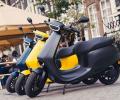
Under regulatory scanner, Bengaluru-based Ola Electric has witnessed an uptick in its sales after facing a decline during the last few months. The company's daily average sales rose to 1,154 units in October, according to Vahan data from the Ministry of Road Transport and Highways (MoRTH). With sales reaching 17,315 units between October 1 and October 15, the company has also boosted its market share to 34 per cent, up from 27 per cent in September, in the electric two-wheeler (e2W) segment.

After a record-breaking year, India's automobile industry is entering 2026 on a relatively strong footing, with sales growth expected in the 6-8 per cent range. The outlook is underpinned by policy support, including GST rationalisation, easing monetary conditions, and income tax relief, which together are likely to improve affordability and sustain consumer demand across vehicle segments.

Honda Motorcycle and Scooter India (HMSI) on Wednesday forayed into the fast-growing domestic electric mobility market with the introduction of e-scooters, ACTIVA e: and QC1, with swappable and fixed batteries. With this, the Japanese two-wheeler maker will now be competing with other legacy players such as Bajaj Auto, Hero MotoCorp, TVS Group as well as pure EV players like Ather and Ola, who already have a good presence in the segment, which is growing at 34 per cent year-on-year.

Given the stronger rural activity, and potential goods and services tax (GST) impact, investors are bullish on the two-wheeler (2W) segment. In August, dealers in the domestic market picked up 11 per cent more 2Ws year-on-year (Y-o-Y), despite only 2 per cent growth in retail registrations. This indicates inventory stocking ahead of the festival season. Export trends were good. TVS Motor and Royal Enfield may have gained domestic market share.
Passenger vehicle wholesales crossed the 10-lakh mark for the first time ever in the June quarter riding on the back of robust demand for utility vehicles, industry body SIAM said on Friday. Total dispatches of passenger vehicles in the first quarter stood at 10,26,006 units, up 3 per cent as compared with 996,565 units in April-June FY24. Utility vehicle sales rose 18 per cent to 645,794 units in the first quarter as against 547,194 units in the year-ago period.

Aided by robust demand, automobile retail sales in India rose by 11 per cent last year as compared to 2022, dealers' body FADA said on Monday. The overall domestic automobile retail sales stood at 2,38,67,990 units in the 2023 calendar year as compared to 2,14,92,324 units in 2022. Passenger vehicle sales stood at 38,60,268 units last year, up 11 per cent from 34,89,953 units in 2022.
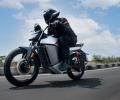
Clearly, some of the bullishness of the early days has gone missing. Ola's market share is slipping amid rising competition from incumbents like Bajaj Auto and TVS.

Earlier in May, Ford India announced that it had dropped its plans to make electric vehicles (EVs) in India, which it intended to export, under the production-linked incentive scheme (PLI). Ford was among 20 companies that had signed a Champion OEM Incentive Scheme under the PLI project with the government in February this year. The decision comes as a blow for the 4,000-odd employees at Ford India's Maraimalai Nagar plant near Chennai and in Sanand, Gujarat. In September last year, the company had announced that it would exit the India market, which it had entered in 1995 through an on-again, off-again joint venture with Mahindra & Mahindra (they split in 1998, signed a JV in 2019 and split again in December 2020), retailing petrol and diesel brands such as the EcoSport, Figo, Aspire, and Endeavour.
